Seattle-area water, mold & odor removal
Water Damage Restoration in Redmond, WA
Local contractors for homes and condos in Redmond. Scheduling during regular business hours.
Redmond restoration made simple
When you need water damage restoration in Redmond, WA, Seattle Water Damage Restoration Services connects homeowners in Redmond, WA with local water damage restoration pros who know the area and work to industry standards. You get quick scheduling, clear communication, and practical solutions for leaks, overflows, and storm-related water issues.
We’re a Seattle-based service that links you with independent contractors for water damage restoration, mold remediation, mold removal, mold testing, and thermal fogging odor removal. Crews are matched to your situation and home type, whether that’s a single-family house near Marymoor Park, a condo close to Redmond Town Center, or a hillside property on Education Hill.
Our office in Seattle, WA is at 2315 Western Ave, Suite 302, Seattle, WA 98121. Office hours are 9 AM – 7 PM daily; reach us at (206) 222-7698 for coverage information and scheduling.
Help for Redmond homes when water gets in
Redmond, WA homeowners see a mix of roof, plumbing, and weather-driven water issues. Seattle Water Damage Restoration Services connects you with vetted local contractors who focus on stopping the source, removing affected materials as needed, and drying the structure thoroughly. The goal is simple: protect your home from secondary damage, keep indoor air healthy, and get you back to normal as smoothly as possible.
How crews reach Redmond from downtown Seattle
Contractors serving Redmond typically stage from the Seattle core and travel from 2315 Western Ave, Suite 302, Seattle, WA 98121. Most trips take State Route 520 east across the floating bridge, then continue toward Redmond via West Lake Sammamish Parkway NE, 148th Avenue NE, or Redmond Way (SR 202), depending on where you are. When SR 520 traffic is heavy, crews may route south to I‑90, then north on I‑405 and back east on SR 520 or Redmond Way to reach neighborhoods on the east side of town. This routing keeps arrival steady for homes near Marymoor Park, Downtown Redmond, and the Microsoft campus area.
What local experience brings to your job
Homes in Redmond span classic split-levels, newer townhomes, and condos near Redmond Town Center. Crawl spaces are common, and basements or daylight basements appear on slopes like Education Hill. Local pros factor in these layouts when planning containment, dehumidifier placement, and safe equipment access. They also understand how moisture behaves near the Sammamish River corridor and Bear Creek, where groundwater and outdoor humidity can slow drying without the right setup.
First visit: fast assessment and stabilization
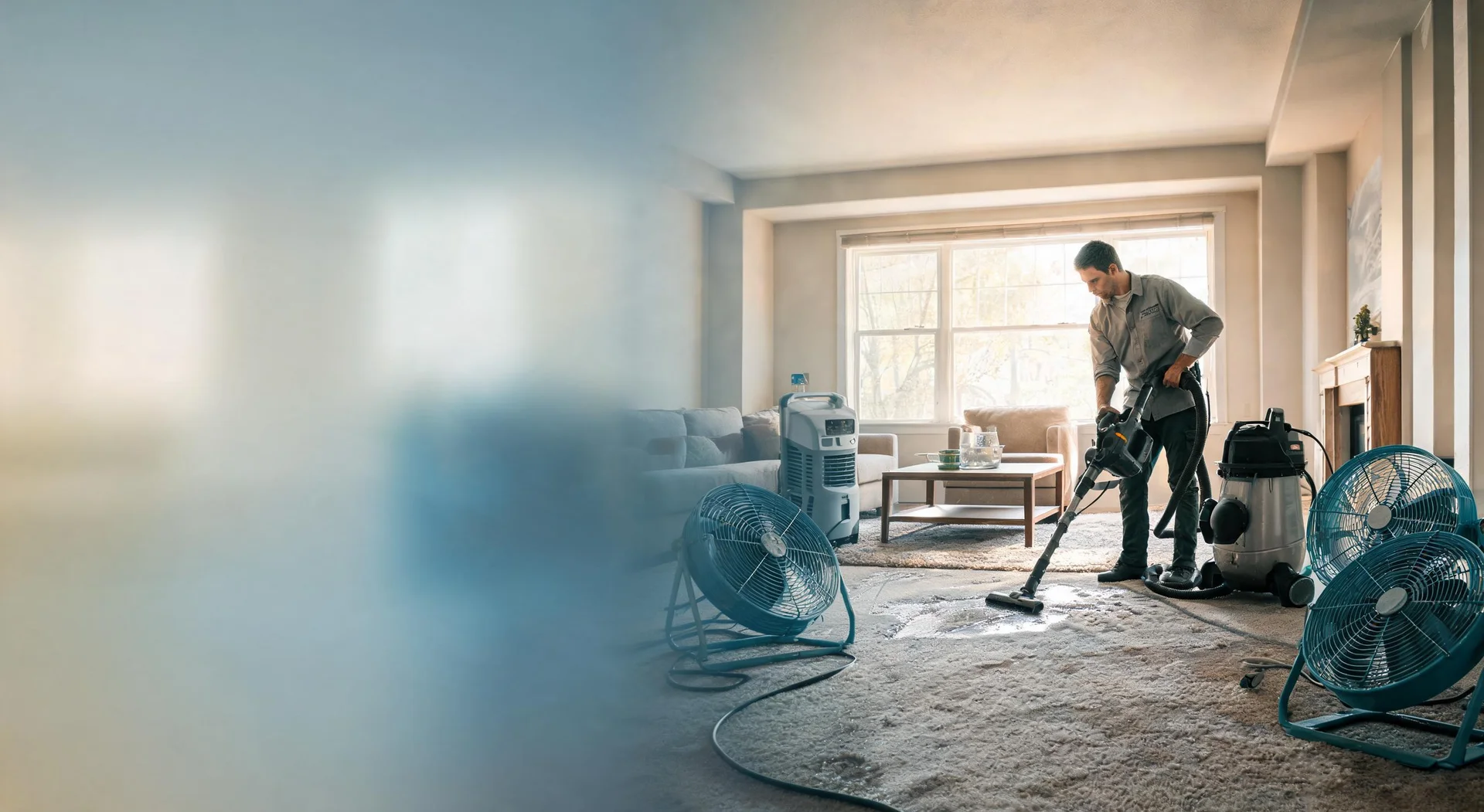
Contractors start with a focused inspection to understand where water traveled and what materials are affected. Expect moisture readings in walls, floors, and trim; photos to document conditions; and a plan that lays out what needs to be removed and what can be dried in place. Standing water is extracted, wet debris is bagged out, and initial protection; like plastic containment and floor coverings... is set so clean areas remain clean during work.
Drying the structure the right way
Drying is tailored to the materials in your home. Hardwood, engineered flooring, tile on backer board, painted drywall, baseboards, and cabinets all dry at different rates. Local pros place air movers for targeted airflow and match them with low‑grain dehumidifiers to pull moisture from the air. They adjust the setup as readings change, aiming for steady progress without over-drying or damaging finishes.
Redmond weather and indoor humidity
Western Washington’s cool seasons bring persistent rain and dense morning air. That outside humidity can sneak into homes during ventilation or door traffic. Crews monitor indoor relative humidity and use the home’s HVAC, along with dehumidification, to keep a stable environment. In summer, attic heat and sun‑exposed walls may cause hidden moisture to drive back into rooms; technicians plan for this by checking cavities again before calling a space dry.
Mold concerns handled with care
If a leak has been active for more than a couple of days, mold can begin to grow on paper-faced drywall, framing, or carpet backing. When mold is present, contractors follow industry‑recognized protocols: contain the work zone, set negative air, remove contaminated materials safely, and clean remaining surfaces before drying finishes. Independent mold testing can be arranged when needed to confirm conditions and clearance, especially in sensitive areas like nurseries or home offices.
Mold testing that’s purposeful
Testing is not always required, but it’s useful when occupants are sensitive, a landlord or HOA requests it, or the history of the leak is unclear. Third‑party testers can provide air or surface samples and write a protocol. After remediation, follow‑up testing may confirm that spore levels have returned to normal background for the area.
Thermal fogging odor removal
Some water losses leave behind stubborn odors, especially after long‑term dampness in carpet or wall cavities. Thermal fogging disperses a fine, penetrating vapor that neutralizes odor molecules in porous materials. Contractors pair fogging with source removal and cleaning, so odors fade because the cause is addressed... not just covered up. Ventilation planning ensures your spaces are ready to re‑enter once the fog has settled and cleared.
Protecting finishes, furniture, and daily life
Work happens in lived‑in spaces, so protection matters. Crews pad corners, cover walkways, and plan equipment placement so doors and stairs stay usable. If a small contents move is needed, pros label items and keep boxes organized for an easy return. Noise and airflow are discussed up front so pets and family routines can be planned around the drying setup.
Clear updates and documentation
You’ll know what’s happening each step of the way. Moisture readings, photos, and notes are kept in a simple record you can share with an insurer, HOA, or property manager. If building materials need replacement after drying, you’ll receive a concise scope describing what was removed and what’s ready for rebuild.
Costs and how they’re determined
Pricing depends on the source of water, how far it traveled, the materials involved, and how complex the drying plan needs to be. For general guidance, see typical water damage restoration costs in Redmond. Your contractor will explain the scope before work starts and provide updates if conditions change during the project.
Common Redmond scenarios local pros handle
- A dishwasher line leak spreading under cabinets in a Downtown Redmond condo, addressed with cabinet toe‑kick drying and targeted dehumidification.
- Storm water backing into a crawl space near Marymoor Park, managed with extraction, vapor barrier assessment, and improved air exchange.
- A bathroom overflow on Education Hill affecting ceiling drywall below, handled with controlled demolition, containment, and drying to the framing.
After drying: getting to rebuild
Once materials reach dry standards, the area is cleaned and left ready for repairs. If drywall, trim, or flooring came out, you’ll have a clear list of what to replace and where. Some restoration contractors offer repair services; if not, you can work with a preferred remodeler, and the documentation makes estimating straightforward.
Where we work in Redmond
Contractors serve all of Redmond, including neighborhoods around Redmond Town Center, the Microsoft campus area, Overlake, Education Hill, and along the Sammamish River Trail. Whether you’re near parks like Marymoor Park or tucked off Avondale Road NE, routing from 2315 Western Ave, Suite 302, Seattle, WA 98121 via SR 520 or I‑90/I‑405 keeps travel predictable during normal business hours.
When you need mold removal or testing only
Sometimes the water issue is in the past, but the musty smell remains. You can be connected with pros who focus on mold removal and mold testing. They’ll look for hidden moisture, outline a right‑sized plan, and explain what remediation includes so you understand the steps before any work begins.
A straightforward process you can trust
From the first inspection to the final moisture check, the process is built for clarity. Local knowledge of Redmond’s housing styles, roads, and weather helps crews show up prepared, set equipment correctly, and finish efficiently. That means less disruption, safe indoor air, and a home that’s ready for whatever comes next.
Our Services in Redmond, WA
Typical water damage restoration cost in Redmond, WA from independent local contractors (same as elsewhere in the Seattle, WA area): $700 - $9,000. See typical water damage restoration costs near Redmond, WA.
Why Redmond, WA Chooses Seattle Water Damage Restoration Services
Local routes that save time
Crews know the SR 520, I‑90, and I‑405 corridors to reach Redmond efficiently from 2315 Western Ave, Suite 302, Seattle, WA 98121, adjusting for traffic patterns around Marymoor Park and Downtown Redmond.
Redmond-specific know‑how
Experience with crawl spaces, daylight basements, and hillside lots like Education Hill shapes a safer, cleaner drying and remediation plan.
Modern tools and methods
Contractors use moisture mapping, targeted airflow, low‑grain dehumidification, and proper containment to protect finishes while drying the structure thoroughly.
Clear updates you can rely on
You receive plain‑language explanations, daily progress notes, and photos so you always know what’s done and what comes next.
Odor solutions that last
Thermal fogging is paired with source removal and cleaning, so musty smells fade because the cause is addressed, not just masked.
Water Damage Restoration FAQs in Redmond, WA
When traveling for water damage restoration in Redmond, WA from 2315 Western Ave, Suite 302, Seattle, WA 98121, which routes do local pros prefer during normal weekday mornings?
Most crews head east on SR 520 across the floating bridge and continue toward Redmond via 148th Avenue NE, West Lake Sammamish Parkway NE, or Redmond Way (SR 202). If SR 520 is slow, an alternate is I‑90 to I‑405 north, then east toward Downtown Redmond or neighborhoods like Education Hill.
How does proximity to the Sammamish River affect water damage restoration in Redmond, WA homes?
Homes near the Sammamish River and Bear Creek can see higher ambient humidity and slower evaporation. Pros account for this by increasing dehumidification capacity, checking crawl spaces, and confirming materials meet dry standards before rebuild begins.
What should Redmond, WA homeowners on Education Hill know about crawl spaces during water damage restoration?
Sloped lots and vented crawl spaces can collect moisture after storms. Contractors inspect vapor barriers, piers, and rim joists, then set airflow and dehumidification to dry framing safely while keeping living areas clean with proper containment.
Are permits required in Redmond, WA for water damage restoration when walls or floors must be replaced?
Drying and cleanup typically do not require permits, but structural repairs or replacement of drywall, insulation, or flooring can trigger City of Redmond permit rules. Contractors can outline what work may need permits and coordinate with your chosen repair professional.
How do fall and winter rains change the drying plan for water damage restoration in Redmond, WA?
Extended wet weather raises outside humidity, so pros manage indoor air with sealed containment and low‑grain dehumidifiers. They also schedule door openings and ventilation carefully to avoid reintroducing moisture during the dry‑out.
How are odors handled after water damage restoration in Redmond, WA condos near Redmond Town Center?
Odors are tackled by removing wet source materials, cleaning affected surfaces, and running air filtration during work. If smells linger in carpets or cavities, thermal fogging is used to neutralize remaining odor molecules without leaving heavy residues.
Contact Us Today for a Free Estimate
Protect your home and prevent ongoing water damage.
Schedule your water damage restoration service today.
Free — no obligations