Seattle-area water, mold & odor help
Water Damage Restoration in Kirkland, WA
Connecting Kirkland homeowners with trusted local specialists. Simple scheduling, clear communication, careful work.
Local help for Kirkland homes
When you need water damage restoration in Kirkland, WA, Seattle Water Damage Restoration Services connects homeowners in Kirkland, WA with local water damage restoration pros. The matched contractors also handle mold remediation, mold removal, mold testing, and thermal fogging odor removal to get homes dry, clean, and fresh.
Office hours run 9 AM–7 PM daily at our Seattle, WA office; (206) 222-7698 is the best number for quick questions about service areas and timing.
Kirkland’s mix of lakeside humidity, hillside lots, and crawl-space construction means moisture problems can spread if not handled quickly and correctly. The pros we match use moisture meters, targeted drying plans, and materials-specific methods to protect structure and finishes.
You’ll get clear updates, photos as needed, and documentation to support insurance claims. Each job is scoped on-site so work fits your home, not a template.
Kirkland coverage for water, mold, and odors
Kirkland, WA homes range from mid-century ramblers and split-levels to new townhomes around Totem Lake and condos by the waterfront. That variety affects how water moves through a structure, how fast materials dry, and what needs to be repaired. The contractors Seattle Water Damage Restoration Services connects you with plan around flooring types, insulation levels, crawl spaces, and finishes so the dry-out is effective without unnecessary tear-out.
How crews reach you from 2315 Western Ave, Suite 302, Seattle, WA 98121
Matched teams start from 2315 Western Ave, Suite 302, Seattle, WA 98121 in downtown Seattle. The typical route is I-5 north to SR 520 east across the Evergreen Point Floating Bridge, then into Kirkland via exits serving 108th Avenue NE, NE 85th Street, or the I-405 corridor for Totem Lake. When traffic patterns or closures make SR 520 less efficient, an alternate is I-90 east to I-405 north, approaching from the south side of town. These routes keep response predictable across neighborhoods from Juanita to Houghton.
Water damage restoration tailored to Kirkland homes
Water from a supply line failure, a wind-driven roof leak, or an overflowing tub doesn’t stay put. It seeps under baseboards, into wall cavities, and across subfloors. Kirkland’s marine climate adds higher ambient humidity, which can slow drying if it isn’t managed. Restoration pros begin with moisture mapping to understand the full extent of wet materials; carpet and pad, hardwood, drywall, cabinetry, and framing; so the plan addresses both visible and hidden moisture.
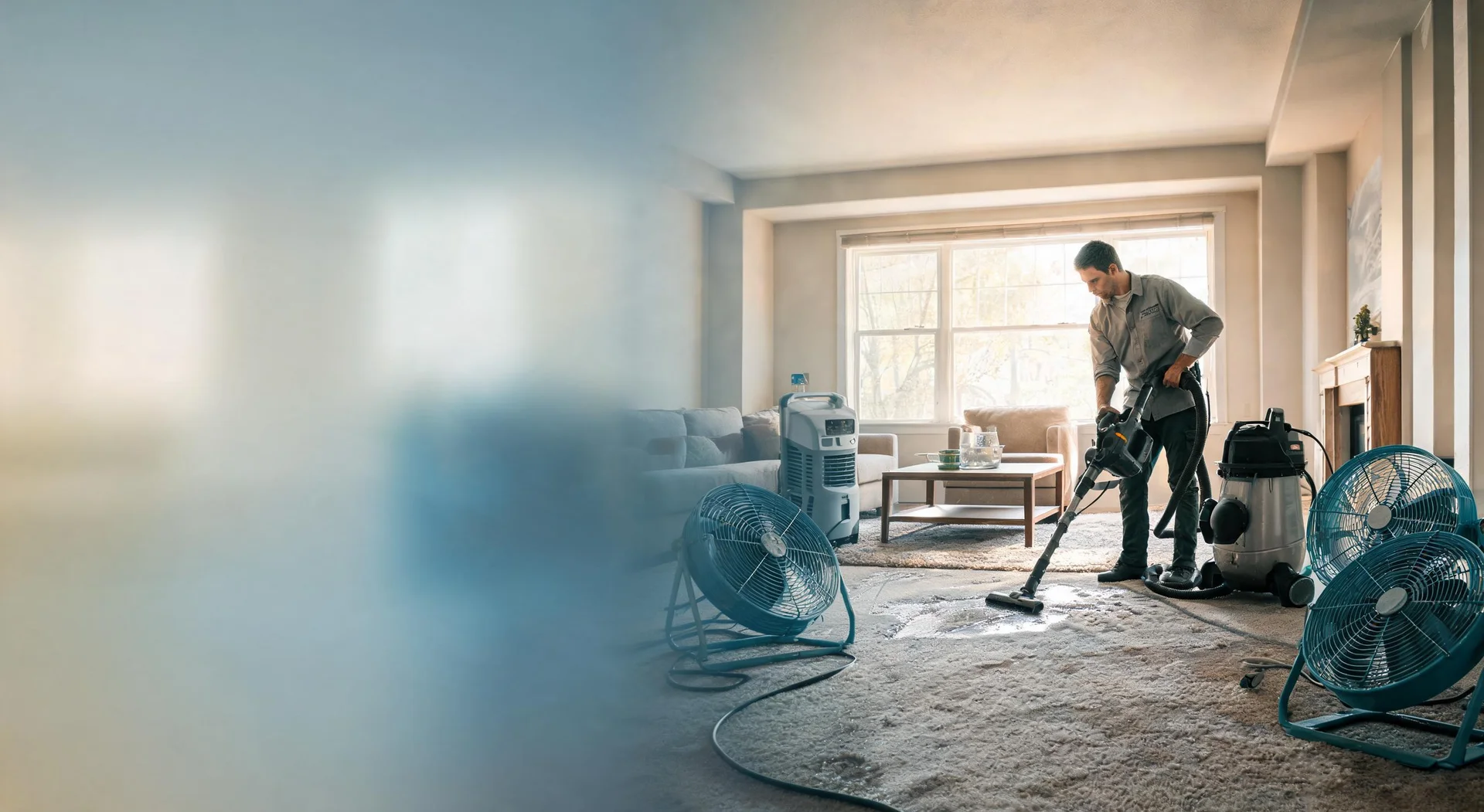
The first priority is stabilization: stopping the source, extracting standing water, and removing items that trap moisture against surfaces. Weighted extraction tools help pull water from carpet and pad. On hard surfaces, squeegee vacuums and pumps speed removal while protecting finishes. Salvageable contents are moved or blocked to prevent staining and warping, and initial antimicrobial applications reduce the risk of odor or secondary growth.
Focused drying and dehumidification
Once water is removed, the emphasis shifts to balanced airflow and humidity control. Air movers are placed to create consistent crossflow across wet surfaces, while low-grain refrigerant or desiccant dehumidifiers pull moisture from the air. In crawl-space homes common in Kirkland, drying often includes directed air under floors and careful monitoring of pier-and-beam cavities so the subfloor dries evenly. Technicians track progress with daily readings, adjusting equipment to avoid over-drying delicate materials like hardwood.
If materials can’t be dried in place; such as waterlogged drywall, saturated insulation, or swollen baseboards - targeted removal keeps repairs localized. Openings may be made at baseboard height to ventilate wall cavities, and toe-kicks on cabinets can be temporarily removed for airflow. The goal is to protect structure, control cost, and speed the return to normal.
Mold remediation and testing for local conditions
Moisture from past leaks or slow condensation can allow mold to take hold, especially in bathrooms without strong ventilation, below-grade walls near landscaped slopes, or attics with poor airflow. Around Juanita and other lake-adjacent areas, elevated ambient humidity can make these issues more persistent. Mold remediation contractors follow a contain–remove–clean approach: isolate the work zone with plastic and negative pressure, remove affected porous materials where required, HEPA-vacuum and wipe remaining surfaces, and apply post-cleaning treatments as appropriate.
When mold is suspected but not visible, or when documentation is needed for a sale or insurance, mold testing can help. Pros may recommend air or surface samples before and after remediation, with analysis by independent labs. Test results inform the scope and confirm that remediation goals were met.
Thermal fogging odor removal
Even after a successful dry-out, odors can linger - musty smells from wet carpet pad, damp drywall, or contents that absorbed moisture. Thermal fogging is one option the matched contractors may use to neutralize stubborn odors. The process creates a penetrating fog that reaches into small crevices and porous materials, pairing with odor molecules rather than just masking them. Odor solutions are chosen to fit the source and the materials in your home.
Neighborhoods and landmarks we know
From homes near Marina Park with lakeside exposure to neighborhoods around Totem Lake and streets leading to Juanita Beach Park, matched pros understand how microclimates affect moisture and airflow. Sloped lots above downtown can push runoff toward foundations during long rains, while wind off Lake Washington can drive rain under shingles and flashing. Plans account for these local patterns so drying is consistent and repairs hold up through the next storm cycle.
Documentation, insurance, and scope of repairs
Clear documentation makes the process smoother. The contractors provide moisture logs, photos as needed, and a written scope of work that aligns with industry standards many insurers recognize. If reconstruction is required after mitigation... drywall, trim, flooring, or paint; those repairs are scheduled after materials reach target moisture. Pricing depends on the job size, materials, and whether mold remediation or repairs are included; see water damage restoration costs in Kirkland for general guidance.
What you can do while help is on the way
If it’s safe, turning off the water at the fixture or main valve reduces further damage. Avoid walking on wet carpet to prevent delamination, and don’t run your home heater at high settings, which can set stains in place. Keep electronics and valuables off the floor and photograph affected areas for your records. If you suspect mold, avoid disturbing the area until containment is set; this helps limit spread.
Crawl spaces, basements, and slab foundations
Kirkland homes sit on a mix of crawl spaces, daylight basements, and slabs. Each foundation type needs a different approach. Crawl spaces require attention to ground moisture, ventilation, and vapor barriers; basements may need wall cavity drying and negative pressure to keep odors from migrating upstairs; slabs call for surface and in-slab moisture assessment, especially under laminate or engineered floors. The matched contractors bring equipment suited to each foundation so drying is complete and verifiable.
After the dry-out: prevention that fits Kirkland
Once materials are back to goal moisture, small improvements can reduce future risk. Clean gutters and downspouts before the fall rains, extend downspout discharge away from foundations, and check caulking at windows and doors that face prevailing winds over Lake Washington. Inside, use bath fans rated for the room size, insulate cold water lines that sweat in summer, and consider a dehumidifier for areas that stay above recommended humidity. These steps complement the restoration work and help protect finishes.
Scheduling that respects your routine
Visits are set during daytime hours so access is easy and noise is predictable. Crews coordinate around school runs, pets, and work-from-home schedules, and they tidy pathways at each step to keep living spaces usable where possible. You’ll know what’s happening and when, with simple updates as milestones are met.
How we keep your home protected
Containment barriers and floor protection go down before equipment moves in. Return vents are covered in work zones, air is filtered through HEPA units where needed, and sensitive areas are masked to prevent dust transfer. At the end of mitigation, equipment leaves once materials test at targets and spaces are cleaned so repairs can begin without extra disruption.
Our Services in Kirkland, WA
Kirkland, WA water damage restoration pricing from independent local contractors matches the rest of the Seattle, WA area: $700 - $9,000. See Kirkland, WA water damage restoration pricing.
Why Kirkland, WA Chooses Seattle Water Damage Restoration Services
Vetted local specialists
We connect you with proven Kirkland-area contractors for water, mold, and odor work tailored to local homes.
Plans built around your home
Scopes match your materials, layout, and foundation type so drying is effective without unnecessary tear-out.
Clear updates and documentation
You receive plain-language updates, moisture logs, and photos as needed to support insurance claims.
Modern tools and methods
From low-grain dehumidifiers to HEPA filtration and thermal fogging, equipment is selected to fit the job.
Respect for schedules and spaces
Daytime appointments, tidy work zones, and floor protection help keep daily life moving during restoration.
Seattle-based coordination
Routing from 2315 Western Ave, Suite 302, Seattle, WA 98121 helps keep travel predictable to neighborhoods across Kirkland.
Water Damage Restoration FAQs in Kirkland, WA
Which routes do pros use for water damage restoration in Kirkland, WA when traveling from downtown Seattle?
Contractors typically depart from 2315 Western Ave, Suite 302, Seattle, WA 98121, head north on I-5, then take SR 520 east across the Evergreen Point Floating Bridge. They enter Kirkland via exits near 108th Avenue NE, NE 85th Street, or continue to I-405 for Totem Lake. If SR 520 is constrained, an alternate is I-90 east to I-405 north.
How do homes near Juanita Beach Park or Totem Lake affect water damage restoration in Kirkland, WA?
Areas near Juanita Beach Park can experience higher ambient humidity from Lake Washington, which slows natural drying if not managed. Around Totem Lake, many newer townhomes use different flooring systems than older ramblers, so the drying plan may vary by substrate and insulation. Crews choose equipment and airflow to match the home type.
Do I need a permit for water damage restoration in Kirkland, WA if walls or floors must be rebuilt?
Mitigation activities like drying and removing wet materials usually do not require a permit. When structural repairs or reconstruction are needed, a City of Kirkland building permit may apply. Contractors can advise on when permits are typical and coordinate timing so repairs follow approved guidelines.
How do fall rains and Lake Washington winds impact water damage restoration in Kirkland, WA?
Prolonged fall rains raise outdoor humidity, so dehumidification is essential to keep drying on track. Wind-driven rain off Lake Washington can push moisture under siding or shingles, which may require targeted cavity drying. Technicians monitor conditions and adjust equipment to maintain steady progress.
Do crawl spaces and daylight basements change the approach to water damage restoration in Kirkland, WA?
Yes. Crawl spaces often need directed airflow and vapor barrier checks to dry subfloors evenly. Daylight basements may require negative pressure to prevent odors from moving upstairs and careful drying of wall cavities against soil. The plan is tailored to the foundation your home has.
How are odors handled after water damage restoration in Kirkland, WA condos near Marina Park?
After drying and cleaning, lingering musty smells can be treated with odor neutralizers or thermal fogging selected for indoor use. Ventilation paths in multi-level condos are considered so odors do not migrate to neighboring units. The goal is to neutralize the source rather than cover the smell.
Contact Us Today for a Free Estimate
Protect your home and prevent ongoing water damage.
Schedule your water damage restoration service today.
Free — no obligations